

Rewiring a house is one of the most important upgrades you can undertake to ensure the safety, efficiency, and future readiness of your home’s electrical system. Whether you’re dealing with an older property or simply looking to modernise your home, professional electrical services are essential for a successful rewiring project. This guide explores why rewiring matters, signs you may need it, the process involved, and how to prepare for it.
Why Rewire Your Home?
Electrical systems are the backbone of modern living. Old or faulty wiring poses serious risks, including electrical shocks, circuit failures, and fire hazards.
Modern rewiring not only mitigates these dangers but also:
Enhances Safety: Replacing old cables reduces fire risks and ensures safe electricity distribution.
Improves Efficiency: New wiring supports energy-efficient appliances, lighting, and smart home devices.
Increases Capacity: Older homes may struggle with contemporary electrical loads; rewiring restores the system’s capability.
Future-Proofs Your Home: Prepares for smart technologies, electric cars, and renewable energy integration.
Boosts Property Value: Updated wiring signals care and compliance to potential buyers.
Signs Your Home May Need Rewiring
Not every home needs a full rewire, but there are clear indicators that your electrical system may be outdated:
Flickering or dimming lights.
Frequent circuit breaker trips or blown fuses.
Worn, discoloured, or crackling sockets.
Smells of burning near electrical outlets.
Old fuse boards without circuit breakers.
Homes over 30 years old with original wiring.
Electrical warning from a recent Electrical Installation Condition Report (EICR).
If any of these signs appear, consulting a qualified electrician is crucial.
The Rewiring Process
Rewiring is a complex task and should always be carried out by registered electricians. The process generally unfolds in structured steps:
Initial Assessment
- Our electrician inspects the property to evaluate the condition of cables, sockets, switches, and the consumer unit. This determines whether a full or partial rewire is necessary.
Planning
- During planning, locations for new sockets, switches, and lighting are mapped out. High-use areas, such as kitchens and home offices, are considered carefully.
First Fix Stage
This stage focuses on structural wiring installation:
- Removing old cables.
- Installing new wiring inside walls, floors, and ceilings.
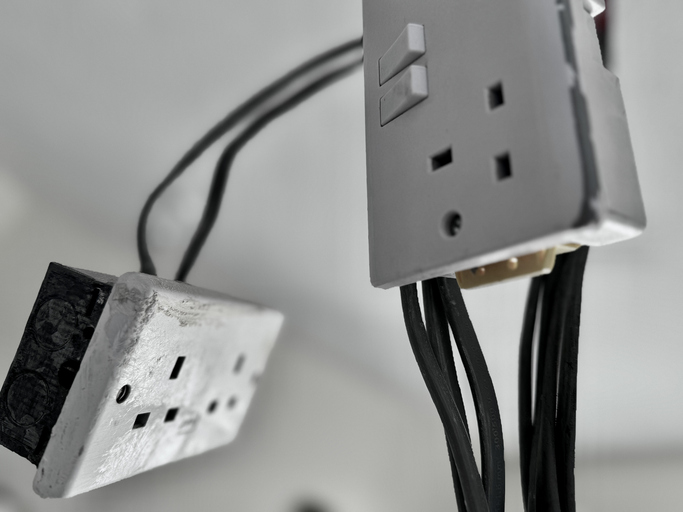
- Securing back boxes for sockets and switches.
- Rewiring fixed appliances like cookers and water heaters.
This stage may require lifting floorboards, cutting into walls, and temporary power disconnection, so preparation is essential.
- Plastering and Making Good
Walls, ceilings, and floors are repaired after cabling is installed, ensuring surfaces are ready for finishing touches.
Second Fix Stage
In the second phase, visible components are installed:
- Light fittings, switches, and sockets.
- Connection to the consumer unit.
- Final system testing to ensure compliance with safety standards.Testing and Certification
Once installation is complete, the system is tested rigorously, and an Electrical Installation Certificate (EIC) is issued. This legally verifies that all work meets UK wiring regulations (BS 7671, IET Wiring Regulations).
Preparing Your Home for Rewiring
Proper preparation can reduce disruption:
- Clear work areas: Remove furniture and valuables.
- Plan temporary power outages: Expect power loss during the first fix.
- Discuss schedules with your electrician: Ensure access to lofts, basements, and cupboards.
- Know your electrical needs: Decide if additional sockets, USB ports, or smart home features are required.
Cost Considerations
The cost of rewiring varies with property size, complexity, and location.
Benefits of Professional Electrical Services
Engaging certified electricians ensures:
- Compliance with safety regulations.
- High-quality workmanship with warranties.
- Expert handling of complex installations and modern systems.
- Peace of mind and reduced long-term risks.
After Rewiring: Maintenance and Upgrades
Ongoing electrical maintenance is vital. Regular safety inspections, particularly through EICRs, help detect potential hazards early. Upgrades such as adding energy-efficient lighting, extra sockets, or smart home integration maximize the benefits of a rewired system.
Conclusion
Rewiring a house is a significant but worthwhile undertaking. It safeguards your home, accommodates modern electrical demands, and enhances long-term property value. With our professional electrical services you can modernise your home safely and efficiently, ensuring that your electrical system is reliable and ready for the future.
Investing in quality rewiring reflects foresight and care for your home—making it safer, smarter, and more efficient for years to come.